
What Makes Manuka Honey Better Than Regular Honey? Explained


What makes Manuka Honey Manuka Honey?
Manuka bushes are native to New Zealand. The pollen from this unique plant provides key amino acids and antibacterial properties that are unique to Manuka Honey. Manuka Honey also contains a significant level of methylglyoxal which has been scientifically proven to fight against bacteria including the superbugs of H-pylori, MRSA, e.Coli and C-Difficile.
All honey has active enzymes that have some antibacterial properties but the properties from the Manuka bush mean that Manuka Honey just super-charges those potent enzymes. Manuka Honey and Manuka Oil have been traditionally used by the native Maori population for generations in their native medicine for all types of illnesses and ailments. In fact, until Manuka Honey was identified as a superfood, a lot of native farmers in New Zealand would feed Manuka Honey to their pigs (obviously some of the luckiest pigs out there)!
Over the last 15 years, scientific research has shown that Manuka Honey can help in the treatment of wound healing, sores and ulcers. The UK NHS has been using sterilised Manuka Honey for wound healing for many years and some British hospitals are using Manuka Honey to pack wound areas where cancer tumours have been removed.
How is Manuka Honey harvested?

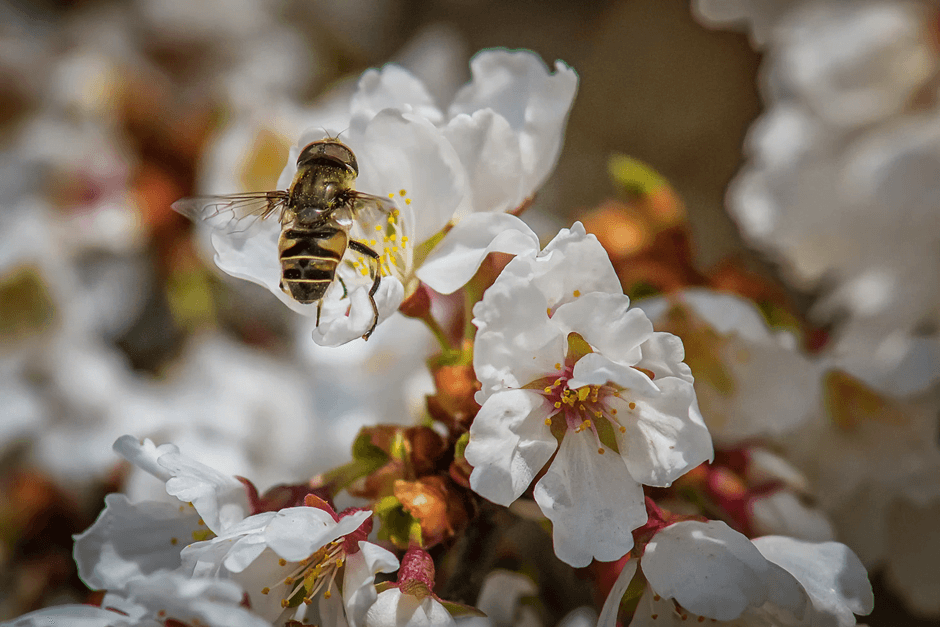
The seasons in New Zealand are the opposite to us in the UK, so the harvest of Manuka Honey starts late February until the end of March. During this time, the bees forage on the Manuka bush which is the only flower to bloom during this timescale in the remote areas of New Zealand where Manuka bushes and Manuka Honey is produced.
And whilst most Manuka Honey isn’t certified organic (primarily because of the additional cost for licensing), most of it is produced and farmed in remote locations away from the population and pollution from everyday life; so it’s purer than normal honey.
Regular Honey is extracted from the hive and put into a machine that filters any impurities (bits of honeycomb, hive, dead bees etc), and then it is either processed immediately into glass or plastic jars, or it is stored in large drums for processing later.
Did you know?
The working temperature of a Bee hive is around 42 degrees, and it stays a stable temperature throughout the year.
Another Fun Fact
did you know that to classify a honey as RAW Honey, it cannot be processed by heating the honey above 42 degrees, which interestingly is the working temperature of a beehive.
Our Related Products:
Also in Natural Health World Articles


D-Mannose FAQ
-
D-mannose is commonly discussed in relation to urinary health, particularly by people who experience recurring urinary discomfort or infections.
It is typically used as a supplement that may support urinary tract health, not as a treatment for an active infection.
-
D-mannose is thought to interact with certain types of bacteria, including Escherichia coli, which are commonly associated with urinary tract infections.
It may help reduce the ability of these bacteria to attach to the lining of the urinary tract, allowing them to be flushed out through normal urination.
This is a proposed mechanism and does not apply to all types of urinary issues.
-
Some people choose to take D-mannose daily, particularly when managing ongoing or recurring urinary issues.
However, there is no single standard approach, and usage can vary depending on the product and individual circumstances.
If you are considering regular use, it’s a good idea to speak to a healthcare professional to ensure it is appropriate for you.
-
D-mannose is generally considered well tolerated for most people when taken as directed. Some individuals may experience mild digestive discomfort, particularly at higher intakes.
If you are pregnant, recovering from surgery, managing a health condition, or taking medication, it’s best to speak to your GP or healthcare professional before use.
-
No — D-mannose is not a replacement for antibiotics or medical treatment.
If you have symptoms of a urinary tract infection, it’s important to speak to a GP, as antibiotics may be required.
D-mannose is typically discussed as a self-care option, not a treatment.
-
The NHS includes D-mannose as one of several options that people may consider if they experience recurrent urinary tract infections.
It is generally described as a self-care approach rather than a medical treatment, and evidence is still considered limited.
-
D-mannose is commonly available in both tablet and powder form.
- Powder can allow more flexible dosing but usually needs mixing
- Tablets are more convenient and easier to take on the go
The best option often depends on personal preference and what fits most easily into your routine.
- Powder can allow more flexible dosing but usually needs mixing
-
There is no single agreed dose for D-mannose.
Different products provide different guidance, and some are designed to be taken in smaller amounts throughout the day rather than all at once.
It’s best to follow the instructions on the product you are using and speak to a healthcare professional if you are unsure.
-
Recurring urinary tract infections can happen for a variety of reasons, including anatomy, hormonal changes, life stage, sexual activity, and individual susceptibility.
In many cases, there isn’t a single clear cause.
If you experience frequent UTIs, speaking to your GP can help identify any patterns, possible triggers, and appropriate ways to manage them.
-
If you are experiencing symptoms such as:
- Burning or pain when urinating
- Frequent or urgent need to urinate
- Lower abdominal discomfort
- Cloudy or strong-smelling urine
It’s important to seek advice from a healthcare professional.
In many cases, you do not always need to wait for a GP appointment. According to NHS guidance:
- A pharmacist can often provide advice and, in some cases, treatment for uncomplicated UTIs
- If you cannot access your GP, you can also use NHS 111 for urgent advice, either online or by phone
You should seek more urgent advice if:
- Symptoms are new, severe, or getting worse
- You have a high or very low temperature, or feel shivery
- You have pain in your lower back or sides
- You notice blood in your urine
- Symptoms are not improving within a couple of days
If you experience recurrent urinary issues, it can also be helpful to speak to your GP about patterns, possible triggers, and whether there are any preventative or supportive approaches that may be appropriate for you. You may also wish to ask whether options like D-mannose are suitable within your overall care.
While most urinary tract infections are straightforward to treat, they can occasionally lead to more serious complications if left unmanaged. In some cases, UTIs can develop into more serious infections, including sepsis, particularly if the infection spreads to the kidneys or bloodstream
This is one of the reasons why it’s important not to ignore ongoing or recurring symptoms, and to seek medical advice where needed.
For more information, you can also visit the NHS guidance here: https://www.nhs.uk/conditions/urinary-tract-infections-utis/
D-mannose is not a substitute for medical care or prescribed treatment.
- Burning or pain when urinating
